














Digital Out of Home Advertising Is Growing Faster Than Online Ads

Digital advertising has long been dominated by online channels such as search engines, social media, and display networks. However, in recent years, Digital Out-of-Home (DOOH) advertising has emerged as one of the fastest-growing segments in the marketing industry. From digital billboards and transit screens to smart kiosks and interactive displays, DOOH is transforming the way brands connect with audiences in the physical world.
As consumers become more resistant to traditional online ads due to ad blockers, privacy concerns, and content overload, advertisers are shifting budgets toward DOOH. This shift is driven by improved targeting, better measurement, higher visibility, and stronger engagement rates.
This article explores why DOOH advertising is growing faster than online ads and why marketers are increasingly investing in this powerful medium.
1. Ad Fatigue and Banner Blindness in Online Advertising
Online advertising has become overcrowded. Users are exposed to hundreds of ads every day across websites, apps, and social platforms. This has led to banner blindness, where users automatically ignore ads without even noticing them.
In addition, many users install ad blockers or limit tracking through privacy settings, reducing the effectiveness of online campaigns. As a result, brands are finding it harder to capture attention in digital spaces.
DOOH advertising, on the other hand, cannot be blocked. Digital billboards, airport screens, and retail displays are placed in high-traffic locations where audiences naturally look, making them far more difficult to ignore.
2. Higher Visibility and Real-World Impact
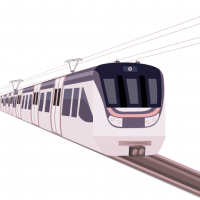
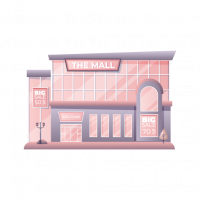
One of the biggest advantages of DOOH advertising is guaranteed visibility. Unlike online ads that can be skipped, closed, or hidden, DOOH ads are displayed in public environments such as highways, shopping malls, offices, and public transport.
Because these screens are placed in strategic locations, they reach audiences during daily routines. This real-world exposure creates stronger brand recall compared to online ads, which often disappear within seconds.
Digital billboards also use high-resolution displays, motion graphics, and dynamic content, making them more engaging than static banners or pop-ups.
3. Privacy Regulations Are Limiting Online Targeting
Online advertising heavily depends on cookies, tracking pixels, and user data. However, new privacy regulations and platform restrictions are making this type of targeting more difficult.
Changes such as:
- Removal of third-party cookies
- App tracking restrictions
- Stricter data protection laws
- User consent requirements
have reduced the accuracy of online ad targeting.
DOOH does not rely on personal data in the same way. Instead, it uses location-based, contextual, and audience-based targeting, which is compliant with privacy laws while still delivering relevant ads.
4. Programmatic DOOH Makes Campaigns Smarter
Modern DOOH is no longer limited to static billboards. With programmatic DOOH, advertisers can buy ad space automatically, similar to online ads.
This allows brands to:
- Change ads in real time
- Target specific locations
- Run campaigns during certain hours
- Show ads based on weather, traffic, or events
For example, a restaurant can display ads during lunch hours, while a ride-sharing company can show ads during peak travel time.
This level of flexibility makes DOOH as dynamic as online advertising, but with higher visibility.
5. Stronger Trust Compared to Online Ads
Consumers tend to trust Out-of-Home advertising more than online ads. Online platforms often contain fake news, spam ads, or misleading content, which reduces credibility.
DOOH ads appear in controlled environments such as malls, airports, office buildings, and highways. Because of this, audiences perceive them as more legitimate and trustworthy.
Higher trust leads to stronger brand awareness and better conversion rates over time.
6. Multi-Channel Marketing Favors DOOH
Modern marketing strategies focus on omnichannel presence, where brands appear both online and offline. DOOH plays a key role in this approach because it connects physical experiences with digital campaigns.
For example:
- A billboard can promote a social media campaign
- A transit screen can display a QR code
- A mall display can direct users to a website
This integration helps brands reinforce their message across multiple touchpoints, increasing overall effectiveness.
7. Growth of Smart Cities and Digital Infrastructure
The rapid development of smart cities is another reason DOOH is expanding quickly. Governments and private companies are installing digital screens in:
- Public transport systems
- Airports and metro stations
- Shopping centers
- Streets and highways
- Corporate buildings
As more digital screens become available, advertisers gain more opportunities to reach audiences outside the internet.
This expanding infrastructure naturally drives faster growth compared to online advertising, which is already saturated.
8. Better Measurement and Analytics Than Traditional OOH
Traditional billboards were difficult to measure, but modern DOOH platforms provide detailed analytics such as:
- Estimated impressions
- Location-based audience data
- Time-of-day performance
- Campaign reach
With mobile data, sensors, and AI, advertisers can now track how many people saw an ad and when.
This makes DOOH more accountable and data-driven, bringing it closer to the precision of online advertising while keeping the benefits of real-world visibility.
9. Less Competition Compared to Online Ads
Online advertising platforms are highly competitive, which increases costs. Keywords, social ads, and display placements often require high budgets to stand out.
DOOH still has less competition in many markets, allowing brands to gain strong exposure without fighting for space with thousands of advertisers.
This lower competition makes DOOH especially attractive for local businesses and emerging brands.
10. The Future of Advertising Is Hybrid
The future of marketing is not online vs offline — it is a combination of both.
DOOH is growing faster because it solves many problems that online advertising faces today:
- Ad blocking
- Privacy restrictions
- Oversaturation
- Low engagement
At the same time, new technologies are making DOOH more flexible, measurable, and targeted than ever before.
Brands that combine online ads with DOOH campaigns are seeing better results, which is why marketing budgets are shifting toward this channel.
Conclusion
Digital Out-of-Home advertising is growing faster than online ads because it offers what modern advertisers need: visibility, trust, privacy-friendly targeting, and real-world impact. As consumers spend less attention on online banners and more time in physical environments, DOOH provides a powerful way to reach audiences without interruption.
With programmatic technology, smart city expansion, and improved analytics, DOOH is no longer just an alternative to online advertising — it is becoming one of the most important channels in modern marketing.
Elyts Advertising and Branding Solutions | www.elyts.in (India) | www.elyts.agency (UAE)
Related Products

Leave a Comment