
















Integrating OOH Media with Digital | Social Campaigns | Elyts
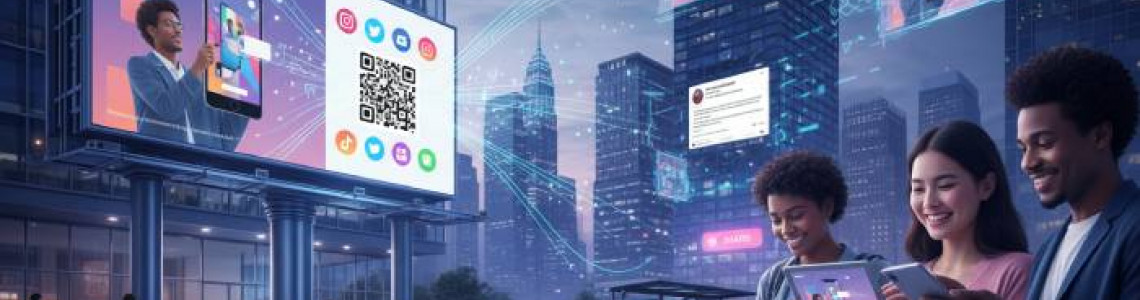
In today’s fragmented media landscape, brands can no longer rely on a single advertising channel. Consumers interact with multiple touchpoints — from billboards and transit ads to Instagram feeds and YouTube videos — often within the same hour. To stay competitive, brands must adopt an omnichannel approach that seamlessly integrates Out-of-Home (OOH) media with digital and social campaigns.
When executed strategically, OOH and digital integration enhances reach, reinforces messaging, and creates powerful brand recall that drives measurable results.
Why OOH Media Still Matters in a Digital-First World
OOH advertising continues to deliver high visibility and unmatched physical presence. Whether it’s roadside billboards, metro branding, airport media, or mall displays, OOH captures attention in real-world environments where digital ads cannot be skipped or blocked.
Modern formats such as Digital Out-of-Home (DOOH) combine traditional impact with data-driven targeting. OOH builds awareness at scale, while digital and social platforms nurture engagement and conversions.
The key to omnichannel success lies in merging these strengths.
The Power of Omnichannel Advertising
Omnichannel marketing ensures consistent messaging across all platforms — offline and online. When OOH campaigns are aligned with digital and social strategies, brands achieve:
-
Stronger brand recall
-
Higher engagement rates
-
Improved customer journey tracking
-
Better campaign attribution
-
Increased ROI
Consumers exposed to both OOH and digital ads are significantly more likely to take action compared to single-channel exposure.
Strategies to Integrate OOH with Digital & Social Campaigns
1. Use QR Codes & Short URLs for Instant Digital Engagement
Adding QR codes, NFC tags, or memorable short URLs on billboards and transit ads encourages audiences to move from offline to online instantly. This bridges physical exposure with measurable digital interaction.
For example, a metro ad promoting a product launch can lead commuters directly to a landing page or Instagram contest.
2. Leverage Geo-Targeted Mobile Advertising
Geo-fencing allows brands to retarget users who pass by specific OOH locations. When someone views a billboard in a high-traffic area, they can later receive related ads on platforms like:
-
Instagram
-
Facebook
-
YouTube
-
Google
This sequential messaging reinforces brand recall and increases conversion probability.
3. Amplify OOH Creatives Through Social Media
An impactful OOH campaign can become social media content. Encourage users to share billboard selfies, branded hashtags, or interactive installations.
Many global campaigns have gone viral when physical activations were amplified on:
-
TikTok
-
X
User-generated content extends campaign reach far beyond the physical location.
4. Sync Campaign Messaging Across Platforms
Consistency is critical in omnichannel campaigns. The visual identity, tagline, and brand tone used in OOH must align with social media ads, influencer collaborations, and performance campaigns.
If a billboard introduces a new product, the same creative concept should appear in digital banners and sponsored posts for seamless storytelling.
5. Integrate Programmatic DOOH with Real-Time Data
Programmatic DOOH allows dynamic ad placements based on:
-
Weather conditions
-
Traffic patterns
-
Time of day
-
Audience demographics
For example, a food delivery brand can trigger OOH ads during peak commute hours while simultaneously launching app install ads online.
This real-time coordination strengthens omnichannel efficiency.
6. Measure Cross-Channel Performance
Modern analytics tools help track how OOH exposure influences digital behavior. Key metrics include:
-
Lift in branded search queries
-
Website traffic spikes during OOH flight dates
-
Social media engagement growth
-
Conversion rate improvement
When OOH is integrated strategically, digital performance metrics typically show measurable uplift.
Real-World Example of Omnichannel Integration
Imagine a fashion brand launching a new collection:
-
Billboards create mass awareness in metro cities.
-
Geo-targeted ads retarget passersby on Instagram.
-
Influencers post styling reels aligned with OOH visuals.
-
Users scan QR codes for exclusive online discounts.
The result? A unified brand experience that moves consumers from awareness to action smoothly.
Benefits of Integrating OOH with Digital & Social
-
Builds trust through physical presence
-
Enhances digital ad effectiveness
-
Expands audience reach
-
Creates immersive brand storytelling
-
Improves campaign ROI
OOH drives top-of-funnel awareness, while digital and social drive engagement and conversions. Together, they form a complete performance ecosystem.
The Future of Omnichannel OOH Campaigns
As data, AI, and programmatic technologies evolve, OOH will become even more connected with digital ecosystems. Smart screens, interactive displays, and location-based targeting will continue to blur the line between offline and online advertising.
Brands that embrace this integration will outperform competitors relying on siloed campaigns.
Conclusion
Integrating OOH media with digital and social campaigns is no longer optional — it is essential for omnichannel success. By combining physical visibility with digital precision, brands can create consistent, measurable, and high-impact marketing strategies.
For advertising agencies and brands aiming for scalable growth, the future lies in synchronized campaigns that engage audiences everywhere — on the streets and on their screens.
Elyts Advertising and Branding Solutions | www.elyts.in (India) | www.elyts.agency (UAE)
Related Products





Leave a Comment