
















Cross Media Advertising | Integrating Mainline Media | Digitally
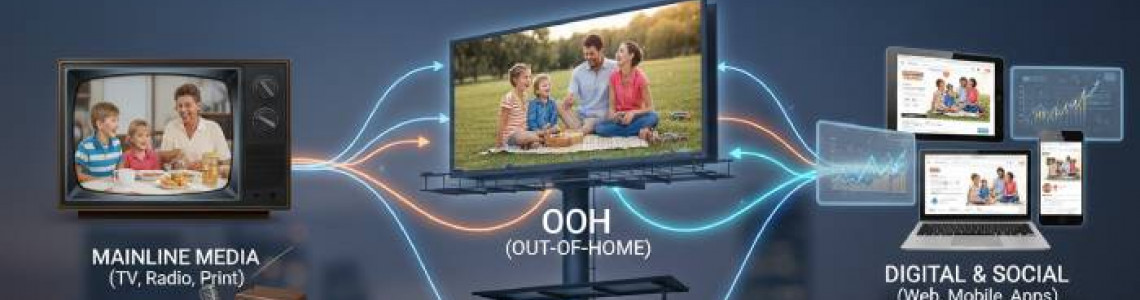
In today’s fragmented media landscape, brands can no longer rely on a single advertising channel to capture consumer attention. Audiences move seamlessly between television screens, smartphones, social platforms, websites, and physical spaces like malls and highways. This shift has made cross-media advertising a critical strategy—one that integrates mainline media with Out-of-Home (OOH), digital, and social media to deliver consistent, high-impact brand experiences.
This article explores how cross-media advertising works, why it matters, and how brands can successfully integrate traditional and modern media channels for maximum reach and ROI.
What Is Cross-Media Advertising?
Cross-media advertising is a strategic approach that delivers a unified brand message across multiple media platforms. Instead of running isolated campaigns on TV, print, digital, or social media, brands align all channels to support a single campaign objective.
Mainline media such as television, radio, newspapers, and magazines provide credibility and mass reach, while OOH, digital, and social platforms enhance engagement, interactivity, and measurable performance.
Why Integrating Mainline Media with Digital Channels Is Essential
Consumers today trust traditional media but engage more deeply with digital platforms. Integrating both creates a powerful synergy.
Key Benefits of Cross-Media Integration
-
Wider Reach: Mainline media captures large audiences, while digital and social extend reach to niche segments
-
Higher Brand Recall: Repeated exposure across platforms strengthens memory and recognition
-
Improved Engagement: Digital and social enable interaction, shares, and real-time feedback
-
Stronger Brand Trust: Mainline media adds credibility, reinforcing digital messages
-
Better Campaign Performance: Unified messaging improves conversions and ROI
Role of Mainline Media in Cross-Media Advertising
Despite rapid digital growth, mainline media remains a foundation for impactful advertising.
Television Advertising
TV builds mass awareness and emotional storytelling, often acting as the campaign launchpad.
Print Media
Newspapers and magazines offer credibility, local relevance, and longer message retention.
Radio Advertising
Radio provides frequency and mobility, complementing digital retargeting strategies.
When integrated with digital touchpoints, these channels drive audiences to take action online.
OOH Advertising as the Physical Bridge
Out-of-Home (OOH) advertising connects offline and online worlds.
How OOH Enhances Cross-Media Campaigns
-
High visibility in high-traffic locations
-
Reinforces TV and digital messaging
-
QR codes and NFC enable instant digital engagement
-
Digital OOH allows dynamic, real-time content updates
OOH ensures consistent brand presence in consumers’ daily journeys.
Digital & Social Media: Driving Engagement and Conversions
Digital and social platforms transform awareness into measurable results.
Digital Media Contributions
-
Performance tracking and analytics
-
Programmatic targeting and retargeting
-
Landing pages that convert offline interest into leads
Social Media Impact
-
Two-way communication with audiences
-
Influencer amplification
-
User-generated content that builds authenticity
When aligned with mainline messaging, digital and social media multiply campaign effectiveness.
Best Practices for Successful Cross-Media Advertising
To execute a high-performing cross-media campaign, brands should follow these best practices:
-
Maintain Consistent Messaging: Same core idea, adapted creatively for each platform
-
Plan Integrated Media Timelines: Synchronize TV, OOH, digital, and social launches
-
Use Data & Analytics: Track cross-platform performance and optimize in real time
-
Leverage Retargeting: Use digital ads to follow up on mainline media exposure
-
Focus on Customer Journey: Align media touchpoints with awareness, consideration, and conversion stages
Future of Cross-Media Advertising
With advancements in AI, data analytics, programmatic buying, and connected TV (CTV), cross-media advertising is becoming more intelligent and measurable. Brands are now able to track offline exposure and link it to online actions, creating a truly unified marketing ecosystem.
In 2026 and beyond, brands that master cross-media integration will enjoy stronger visibility, deeper engagement, and sustained brand growth.
Conclusion
Cross-media advertising is no longer optional—it is essential. By integrating mainline media with OOH, digital, and social platforms, brands can build trust, increase reach, and drive measurable results. A well-executed cross-media strategy ensures that your brand stays visible, relevant, and impactful across every consumer touchpoint.
For brands aiming to maximize advertising effectiveness in a multi-screen, multi-channel world, cross-media advertising is the future of marketing success.
Elyts Advertising and Branding Solutions | www.elyts.in (India) | www.elyts.agency (UAE)
Related Products

Leave a Comment