















Sustainable Mall Media | Eco Friendly Indoor Advertising Trends
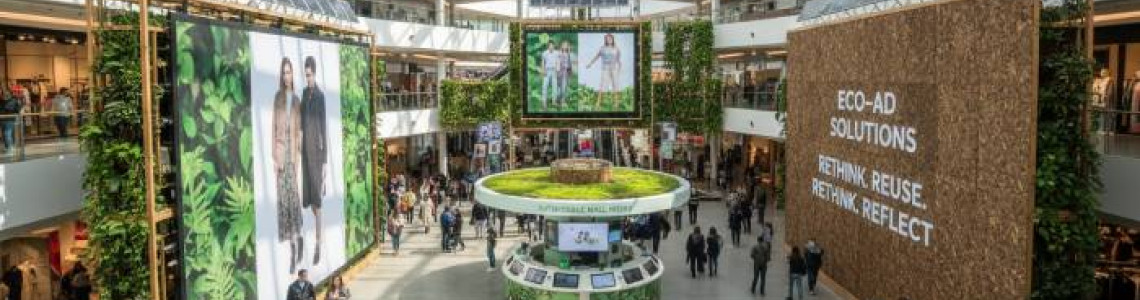
In today’s fast-evolving retail environment, sustainability has become more than just a buzzword—it is a strategic necessity. Shopping malls, which traditionally rely on heavy digital displays and printed advertising, are now exploring eco-friendly solutions to reduce their carbon footprint. Sustainable mall media not only aligns with environmental responsibility but also enhances brand perception among increasingly conscious consumers.
The Rise of Eco-Friendly Indoor Advertising
Consumers are more aware than ever of environmental issues, and their expectations extend to the brands and spaces they engage with. Indoor advertising in malls—ranging from digital screens to interactive kiosks—can now incorporate eco-conscious practices to deliver messages without compromising sustainability.
Key drivers behind this shift include:
-
Regulatory pressures for greener operations.
-
Consumer demand for environmentally responsible brands.
-
Technological advancements that make energy-efficient media feasible.
Innovative Sustainable Mall Media Solutions
-
Energy-Efficient Digital Displays
Modern LED and OLED screens consume significantly less power than traditional displays. Energy-saving modes, automatic brightness adjustment, and solar-powered panels are becoming mainstream in mall media setups, allowing brands to advertise effectively while reducing energy consumption. -
Interactive Touchpoints with Minimal Materials
Kiosks, QR code walls, and projection-based interactions reduce reliance on printed materials. These interactive solutions provide engaging experiences while minimizing paper and plastic waste. -
Recyclable and Biodegradable Print Media
For malls that still use print displays, sustainable options like recycled cardboard, biodegradable posters, and soy-based inks are gaining traction. These materials not only reduce landfill waste but also communicate eco-conscious values to shoppers. -
Programmatic Digital Signage
Programmatic solutions allow brands to display content only when audiences are present. This targeted approach reduces unnecessary energy use and ensures advertising is more effective, aligning ROI with sustainability. -
Green-Themed Campaigns and Experiential Zones
Brands are incorporating sustainability into the content itself—using storytelling to highlight environmental initiatives, recycling programs, and eco-friendly products. Experiential zones, like VR-driven environmental journeys, combine education with entertainment.
Benefits of Sustainable Mall Media
-
Reduced Operational Costs: Energy-efficient screens and print alternatives lower electricity and material expenses.
-
Stronger Brand Perception: Shoppers associate eco-friendly advertising with forward-thinking, responsible brands.
-
Enhanced Engagement: Interactive and sustainable media often attract more attention than traditional displays.
-
Regulatory Compliance: Malls can meet environmental guidelines while staying competitive.
The Future of Eco-Conscious Indoor Advertising
The next wave of mall media will blend technology, creativity, and sustainability. Smart sensors, AI-driven personalization, and IoT-enabled displays are poised to optimize both shopper engagement and energy efficiency. As indoor advertising continues to evolve, sustainability will remain a core differentiator for malls and brands alike.
By adopting sustainable mall media solutions, brands and shopping centers can reduce their environmental impact, improve customer experience, and future-proof their marketing strategies in an increasingly eco-conscious world.
Elyts Advertising and Branding Solutions | www.elyts.in (India) | www.elyts.agency (UAE)
Related Products





Leave a Comment