














Smart Cities | Smart Billboards | Evolution | Driven OOH Media
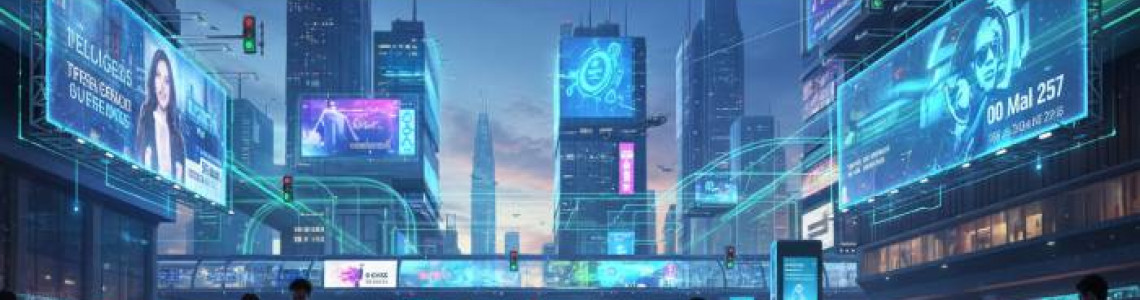
The rise of smart cities is redefining how brands communicate with audiences in urban environments. As infrastructure becomes more connected, data-driven, and digitally integrated, Out-of-Home (OOH) media is also undergoing a technological transformation. Traditional static billboards are rapidly evolving into intelligent, responsive advertising platforms powered by AI, IoT, and real-time analytics.
Smart billboards are no longer just display surfaces—they are interactive, data-enabled communication hubs that align perfectly with the vision of modern smart cities.
The Rise of Smart Cities and Connected Infrastructure
Smart cities leverage technologies like IoT sensors, 5G networks, AI-driven analytics, and cloud computing to improve urban living. From intelligent traffic systems to connected public transportation and digital kiosks, cities are becoming more dynamic and data-centric.
For advertisers, this presents a powerful opportunity. Digital screens integrated into transport hubs, metro stations, airports, shopping districts, and highways can now tap into real-time data streams to deliver relevant, contextual messaging.
As cities grow smarter, OOH media becomes smarter too.
From Traditional Billboards to Smart Billboards
Traditional billboards were static and location-dependent. Their impact was based purely on visibility and creative appeal. Today’s smart billboards are:
-
Digitally connected
-
Programmatically managed
-
Data-driven
-
Environment-responsive
-
Interactive
This evolution is largely driven by Digital Out-of-Home (DOOH) technology, enabling brands to change creatives instantly, optimize campaigns in real time, and measure audience engagement more accurately.
Key Technologies Powering Smart Billboards
1. Internet of Things (IoT) Integration
IoT sensors embedded in city infrastructure provide real-time data such as traffic density, weather conditions, and footfall. Smart billboards can adjust messaging based on these triggers. For example, a cold beverage ad may activate during peak afternoon heat.
2. Artificial Intelligence (AI)
AI algorithms analyze audience demographics, traffic patterns, and behavioral insights to optimize ad placements and content delivery. Machine learning enhances targeting precision and campaign performance.
3. Programmatic DOOH
Programmatic buying allows advertisers to automate media purchasing across digital screens. Ads can be scheduled dynamically based on time, location, or audience data, increasing efficiency and ROI.
4. 5G Connectivity
With faster and more reliable connectivity, smart billboards can stream high-resolution video content, interactive experiences, and real-time updates without delays.
5. Data Analytics & Measurement
Modern smart billboards use anonymized mobile data and computer vision analytics to estimate impressions, dwell time, and engagement levels—bringing OOH closer to digital advertising in terms of measurable performance.
Benefits of Smart Billboards in Smart Cities
Real-Time Personalization
Ads can adapt instantly to environmental factors such as weather, time of day, traffic congestion, or local events.
Higher Engagement
Interactive elements like QR codes, NFC, and mobile integration encourage direct consumer participation.
Improved ROI
Data-driven insights enable brands to optimize budgets, reduce wastage, and improve campaign effectiveness.
Sustainability
Digital screens reduce paper waste and allow multiple brands to share a single structure, minimizing environmental impact. Many smart billboards are also powered by renewable energy sources.
Smart Billboards and Urban Mobility
In smart cities, mobility is highly connected. Smart billboards placed near metro stations, bus stops, and highways can integrate with traffic management systems. For example:
-
Displaying alternate route suggestions sponsored by automotive brands
-
Promoting ride-sharing services during peak congestion
-
Advertising nearby retail stores based on location intelligence
This level of contextual relevance increases brand recall and drives consumer action.
The Role of Data Privacy and Ethical Advertising
While smart billboards use data to enhance targeting, privacy remains critical. Ethical OOH media practices focus on anonymized and aggregated data rather than personal identification. Transparent policies and compliance with data protection regulations ensure consumer trust.
Challenges in Tech-Driven OOH Media
Despite its growth, smart billboard implementation faces certain challenges:
-
High installation and infrastructure costs
-
Dependence on reliable connectivity
-
Regulatory approvals in urban zones
-
Data security concerns
However, as technology becomes more affordable and scalable, adoption rates continue to increase.
The Future of Smart Billboards in Smart Cities
The future of OOH media lies in hyper-connectivity. Emerging trends include:
-
AI-powered predictive advertising
-
Augmented reality-enabled billboards
-
Integration with autonomous vehicles
-
Real-time programmatic bidding across city-wide networks
-
Green, energy-efficient digital displays
As cities continue evolving into digital ecosystems, smart billboards will play a central role in shaping urban brand experiences.
Conclusion
Smart cities are transforming how urban environments function—and smart billboards are transforming how brands communicate within those environments. By combining data intelligence, connectivity, and creativity, tech-driven OOH media delivers measurable, engaging, and contextually relevant advertising experiences.
For brands looking to stay competitive in an increasingly digital world, investing in smart billboard strategies is no longer optional—it is essential.
Elyts Advertising and Branding Solutions | www.elyts.in (India) | www.elyts.agency (UAE)
Related Products




Leave a Comment