
















Programmatic Advertising | Maximizing ROI During Live Events
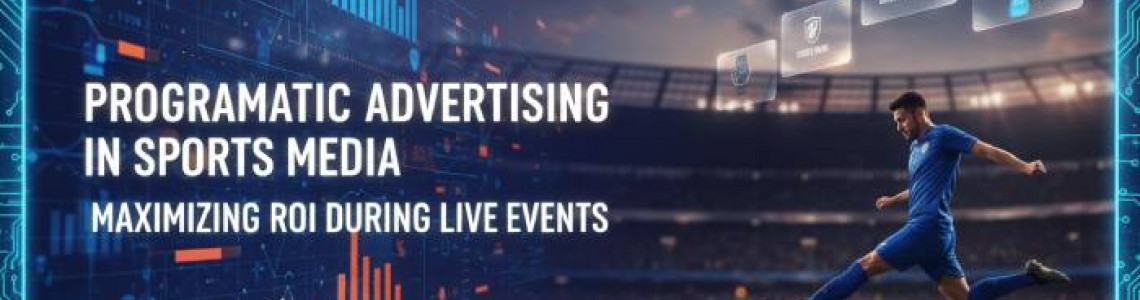
The sports media landscape is evolving rapidly, and advertisers are constantly searching for smarter ways to engage fans in real time. With live matches attracting millions of highly engaged viewers across TV, OTT, and mobile platforms, programmatic advertising in sports media has emerged as a powerful solution to maximize ROI during live events.
Unlike traditional ad buying, programmatic advertising uses automated technology, real-time bidding, and audience data to deliver highly targeted ads at the right moment — especially during high-impact live sports moments.
What Is Programmatic Advertising in Sports Media?
Programmatic advertising refers to the automated buying and selling of digital ad inventory using AI-driven algorithms and real-time data. In sports media, this technology allows advertisers to:
-
Deliver ads during live streaming matches
-
Target specific fan segments
-
Adjust bids in real time based on game moments
-
Optimize performance instantly
Instead of booking fixed ad slots weeks in advance, brands can now dynamically place ads across OTT platforms, sports apps, websites, and connected TV.
Why Live Sports Events Are a Goldmine for Advertisers
Live sports events create unmatched audience engagement. Whether it’s cricket, football, basketball, or esports, fans are emotionally invested and highly attentive.
Key advantages include:
-
Massive real-time viewership
-
High viewer retention rates
-
Multi-screen engagement (TV + mobile)
-
Social media amplification
For advertisers, this means better visibility, stronger recall, and higher conversion potential.
How Programmatic Advertising Maximizes ROI During Live Events
1. Real-Time Audience Targeting
During live sports events, user behavior changes rapidly. Programmatic platforms analyze:
-
Viewing history
-
Location data
-
Device type
-
Demographics
-
Past purchase behavior
This enables advertisers to serve personalized ads — such as sports merchandise, food delivery, fantasy leagues, or betting platforms — tailored to each viewer.
2. Moment-Based Advertising
One of the biggest advantages of programmatic sports advertising is moment targeting.
For example:
-
A food delivery brand can increase bids during halftime.
-
A sports apparel company can push ads immediately after a star player scores.
-
A fantasy gaming app can promote contests before the second innings in cricket.
This contextual relevance significantly boosts click-through rates (CTR) and conversions.
3. Optimized Ad Spend Through Real-Time Bidding (RTB)
Real-time bidding ensures advertisers only pay the optimal price for impressions. If engagement spikes during a crucial match moment, advertisers can automatically increase bids. If engagement drops, budgets can be adjusted instantly.
This eliminates wastage and improves return on ad spend (ROAS).
4. Cross-Platform Reach
Today’s sports fans consume content across:
-
OTT platforms
-
Sports streaming apps
-
Social media
-
Connected TV (CTV)
-
Mobile devices
Programmatic advertising unifies campaigns across these channels, ensuring consistent messaging and better frequency control.
5. Advanced Analytics and Attribution
Unlike traditional sports sponsorships, programmatic advertising provides measurable data, including:
-
Impressions
-
Viewability rates
-
Click-through rates
-
Conversion rates
-
Customer acquisition cost
This transparency helps brands refine campaigns mid-event and post-event.
Key Strategies to Maximize ROI in Live Sports Campaigns
To fully leverage programmatic advertising in sports media, advertisers should focus on:
✔ Audience Segmentation
Divide audiences into micro-segments such as hardcore fans, casual viewers, fantasy players, or regional supporters.
✔ Geo-Targeting
Target specific cities or regions where teams are popular to increase local engagement.
✔ Dynamic Creative Optimization (DCO)
Use AI-driven creative variations that adapt messaging based on real-time match situations.
✔ Frequency Capping
Avoid ad fatigue during long matches by managing impression frequency.
✔ Retargeting Post-Event
Capture engaged viewers and retarget them after the match with exclusive offers.
The Role of AI and Machine Learning
Artificial Intelligence enhances programmatic sports advertising by:
-
Predicting high-engagement moments
-
Automating budget allocation
-
Detecting fraudulent traffic
-
Improving audience insights
Machine learning models continuously improve performance as more data is collected across matches and tournaments.
Challenges to Consider
While programmatic advertising offers immense benefits, brands must also address:
-
Ad fraud risks
-
Brand safety concerns
-
Latency during live streaming
-
Data privacy regulations
Partnering with trusted sports media networks and ad tech platforms ensures smoother campaign execution.
The Future of Programmatic Advertising in Sports Media
With the growth of 5G, OTT platforms, and connected TV, live sports streaming is expected to dominate digital consumption. As sports rights become increasingly digital-first, programmatic advertising will play a central role in monetization strategies.
Interactive ads, shoppable video formats, AI-powered personalization, and real-time fan engagement tools will further increase campaign efficiency and ROI.
Conclusion
Programmatic advertising in sports media is transforming how brands connect with fans during live events. By leveraging real-time data, automation, and AI-driven targeting, advertisers can deliver highly relevant ads at precisely the right moment.
For brands aiming to maximize ROI during live sports events, programmatic strategies are no longer optional — they are essential. In a world where attention spans are short but sports passion runs deep, precision-driven advertising makes all the difference.
Elyts Advertising and Branding Solutions | www.elyts.in (India) | www.elyts.agency (UAE)
Related Products
Leave a Comment