















OOH Media | Digital Ads | Which Delivers Better Brand Recall
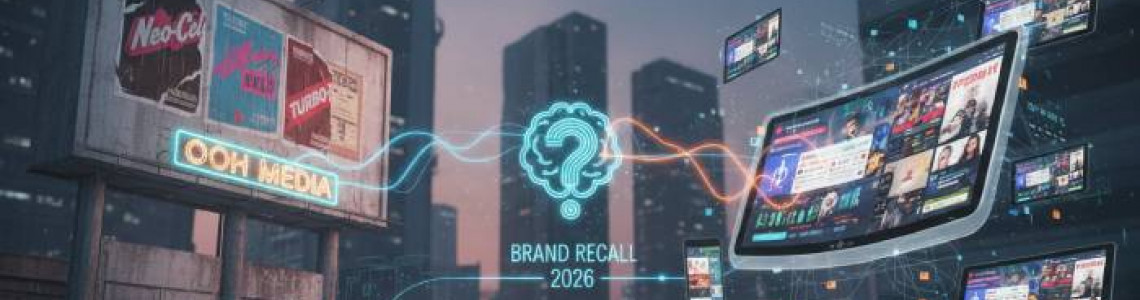
As brands compete for consumer attention in an increasingly fragmented media landscape, brand recall has become a critical performance metric. In 2026, marketers are investing heavily in both Out-of-Home (OOH) media and digital advertising, but the question remains: which medium delivers stronger and more lasting brand recall?
Let’s explore how OOH media and digital ads compare in terms of visibility, engagement, memorability, and real-world impact.
Understanding Brand Recall in 2026
Brand recall refers to a consumer’s ability to remember a brand after being exposed to an advertisement. In 2026, recall is influenced by:
-
Ad clutter and screen fatigue
-
Contextual relevance
-
Frequency and repetition
-
Emotional and visual impact
-
Trust and perceived authenticity
With consumers exposed to thousands of digital messages daily, recall is no longer just about reach—it’s about meaningful presence.
OOH Media: High Visibility, Low Distraction
OOH media includes billboards, transit ads, street furniture, and Digital Out-of-Home (DOOH) screens. In 2026, OOH has evolved into a data-driven, tech-enabled channel that combines scale with simplicity.
Why OOH Drives Strong Brand Recall
-
Unskippable exposure: OOH ads cannot be blocked, skipped, or ignored like online ads
-
Contextual placement: Ads appear where people live, work, commute, and shop
-
Lower ad clutter: Fewer competing messages compared to mobile and social feeds
-
Visual dominance: Large formats and bold creatives enhance memorability
-
Repeated exposure: Daily routes ensure consistent brand reinforcement
Studies continue to show that OOH creates strong mental availability, making brands top-of-mind during purchase decisions.
Digital Ads: Targeted but Easily Forgotten
Digital ads include social media, search, display, video, OTT, and mobile advertising. While digital platforms excel at precision targeting, recall performance often varies.
Strengths of Digital Advertising
-
Hyper-targeted audience segmentation
-
Real-time optimization and analytics
-
Interactive formats like video, AR, and shoppable ads
-
Performance-driven metrics such as clicks and conversions
Challenges Affecting Brand Recall
-
Ad fatigue due to overexposure
-
Banner blindness and scroll behavior
-
Ad blockers reducing visibility
-
Short attention spans and content overload
In 2026, many digital ads drive immediate action but struggle to create long-term brand memory unless supported by strong creative storytelling.
OOH vs Digital Ads: Brand Recall Comparison
| Factor | OOH Media | Digital Ads |
|---|---|---|
| Attention | High | Medium to Low |
| Ad Avoidance | None | High |
| Visual Impact | Very Strong | Moderate |
| Contextual Trust | High | Medium |
| Frequency Recall | Strong | Inconsistent |
| Screen Fatigue | None | High |
OOH consistently outperforms digital ads in unaided brand recall, especially for mass-market brands, FMCG, automotive, real estate, and retail.
The Role of DOOH and Programmatic OOH
In 2026, the rise of Digital Out-of-Home (DOOH) has narrowed the gap between OOH and digital advertising. Brands can now:
-
Use programmatic buying
-
Trigger ads based on time, weather, or audience data
-
Sync OOH campaigns with mobile and social ads
-
Measure footfall, impressions, and uplift
This convergence makes OOH not just a branding tool, but a full-funnel recall driver.
The Winning Strategy: OOH + Digital Integration
Rather than choosing one over the other, the most effective campaigns in 2026 use OOH and digital together.
Why an Omnichannel Approach Works
-
OOH builds initial awareness and trust
-
Digital reinforces messaging and drives action
-
Cross-channel repetition boosts memory encoding
-
Unified creatives improve recognition
Brands that integrate OOH with mobile retargeting and social amplification see significantly higher brand recall than digital-only campaigns.
Final Verdict: Which Delivers Better Brand Recall in 2026?
If the goal is lasting brand recall, OOH media holds a clear advantage in 2026 due to its unavoidable presence, strong visual impact, and real-world context. Digital ads remain powerful for targeting and conversions, but they are most effective when anchored by OOH visibility.
For brands looking to stay memorable in a crowded advertising ecosystem, OOH is no longer optional—it’s essential.
Elyts Advertising and Branding Solutions | www.elyts.in (India) | www.elyts.agency (UAE)
Related Products
Leave a Comment