












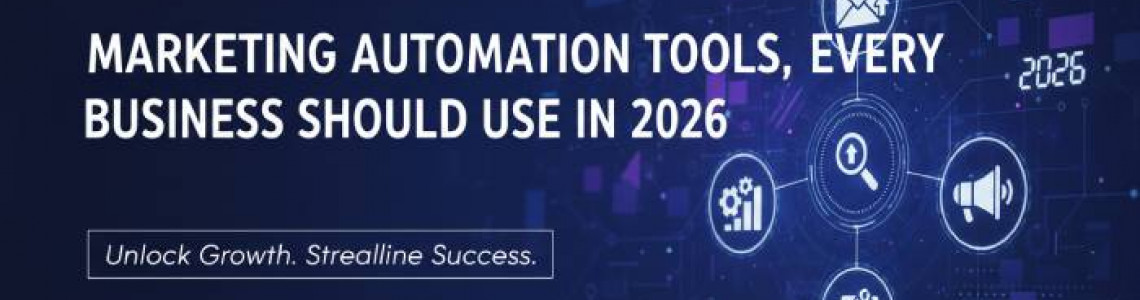
Marketing Automation Tools Every Business Should Use in 2026
In 2026, marketing is no longer about sending mass emails or running isolated ad campaigns. It’s about delivering personalized, data-driven, and timely customer experiences across multiple channels. Businesses that fail to automate risk falling behind competitors who use smart tools to increase efficiency, improve targeting, and boost ROI.
Marketing automation tools have evolved from simple email schedulers into powerful AI-driven ecosystems that manage customer journeys, analyze behavior, and optimize performance in real time.
Let’s explore the essential marketing automation tools every business should use in 2026 to stay competitive and scalable.
Why Marketing Automation Is Critical in 2026
Before diving into tools, it’s important to understand why automation is no longer optional:
-
Customers expect hyper-personalized experiences
-
Multi-channel marketing is complex and time-consuming
-
AI-driven insights improve conversion rates
-
Businesses need better ROI tracking
-
Sales and marketing alignment is essential
Automation reduces manual effort while increasing precision, consistency, and performance.
1. AI-Powered Email Marketing Automation
Email marketing remains one of the highest ROI channels — but in 2026, generic newsletters don’t work.
Modern email automation tools offer:
-
AI subject line optimization
-
Behavior-triggered email flows
-
Predictive send-time optimization
-
Dynamic personalization
-
Automated segmentation
Why it matters: Businesses can nurture leads automatically and convert prospects based on real-time behavior rather than guesswork.
2. CRM with Integrated Marketing Automation
Customer Relationship Management (CRM) systems now combine sales pipelines, lead scoring, and automated workflows.
Key features to look for:
-
Automated lead scoring
-
Sales pipeline tracking
-
Smart workflow triggers
-
Integrated communication history
-
AI-driven forecasting
Benefit: Seamless collaboration between sales and marketing teams increases closing rates and shortens sales cycles.
3. Social Media Automation Tools
In 2026, brands must maintain a constant social presence. Social automation tools help businesses:
-
Schedule posts across platforms
-
Analyze engagement metrics
-
Monitor brand mentions
-
Automate responses via AI chatbots
-
Generate content suggestions
Advanced tools now include AI content generation and predictive analytics to identify high-performing formats.
Impact: Businesses save time while maintaining consistent engagement across platforms.
4. AI Chatbots & Conversational Marketing Platforms
Conversational marketing is becoming the standard.
Modern chatbot platforms can:
-
Qualify leads automatically
-
Answer FAQs instantly
-
Schedule appointments
-
Route conversations to sales teams
-
Integrate with CRM systems
AI-powered chatbots now understand intent, context, and sentiment, offering near-human interactions.
Result: 24/7 customer support and improved lead conversion rates.
5. Marketing Analytics & Attribution Tools
Data-driven decisions are the backbone of modern marketing. Advanced analytics tools provide:
-
Multi-touch attribution models
-
Customer journey tracking
-
Real-time performance dashboards
-
Cross-channel ROI analysis
-
Predictive insights
Businesses can now understand exactly which channel, campaign, or touchpoint drives conversions.
Why it’s essential: Eliminates wasted ad spend and improves campaign optimization.
6. Personalization & Customer Data Platforms (CDPs)
In a cookie-less world, first-party data is king.
Customer Data Platforms help businesses:
-
Unify customer data across channels
-
Create detailed customer profiles
-
Deliver personalized website experiences
-
Trigger behavior-based messaging
-
Improve customer retention
With increasing privacy regulations, CDPs ensure compliance while maximizing personalization.
7. Workflow & Campaign Automation Platforms
Comprehensive automation platforms allow businesses to:
-
Create multi-step customer journeys
-
Automate retargeting campaigns
-
Trigger SMS, email, and push notifications
-
Score and nurture leads
-
Integrate with ad platforms
These tools reduce manual work and ensure consistent customer communication at every stage of the funnel.
8. AI-Powered Content Automation Tools
Content marketing in 2026 relies heavily on AI.
Automation tools can now:
-
Generate SEO-optimized content drafts
-
Optimize headlines and keywords
-
Suggest content gaps
-
Repurpose long-form content into short-form formats
-
Analyze competitor content performance
When used strategically, these tools enhance productivity without sacrificing creativity.
9. SMS & WhatsApp Automation Platforms
Direct messaging channels are experiencing explosive growth.
Modern tools enable:
-
Automated drip campaigns
-
Abandoned cart reminders
-
Promotional alerts
-
Two-way messaging automation
-
CRM integration
These channels often show higher open rates than email, making them powerful conversion drivers.
10. Ad Campaign Automation & AI Bidding Tools
Paid advertising is becoming more algorithm-driven.
Smart ad automation tools offer:
-
Automated bidding strategies
-
Audience expansion through AI
-
Performance-based budget allocation
-
Real-time campaign optimization
-
Predictive ad testing
Businesses can now run highly efficient campaigns without manually adjusting bids daily.
Key Trends in Marketing Automation for 2026
Marketing automation in 2026 is defined by:
-
AI-first decision-making
-
Privacy-focused data strategies
-
Omnichannel integration
-
Predictive analytics
-
Real-time personalization
-
No-code automation workflows
The future is not about replacing marketers but empowering them with smarter systems.
How to Choose the Right Marketing Automation Tools
Not every tool fits every business. When selecting automation software, consider:
-
Business size and scalability
-
Integration capabilities
-
Ease of use
-
AI functionality
-
Data security and compliance
-
Cost vs ROI potential
Start small, integrate gradually, and expand based on performance insights.
Final Thoughts
Marketing automation in 2026 is no longer a luxury — it’s a necessity. Businesses that leverage AI-driven automation tools can improve efficiency, increase conversions, and create seamless customer journeys across channels.
The key is not just adopting tools but using them strategically to enhance personalization, data analysis, and customer engagement.
Elyts Advertising and Branding Solutions | www.elyts.in (India) | www.elyts.agency (UAE)
Related Products
Leave a Comment