















Mall Media vs High Street Advertising | Which Delivers Better ROI
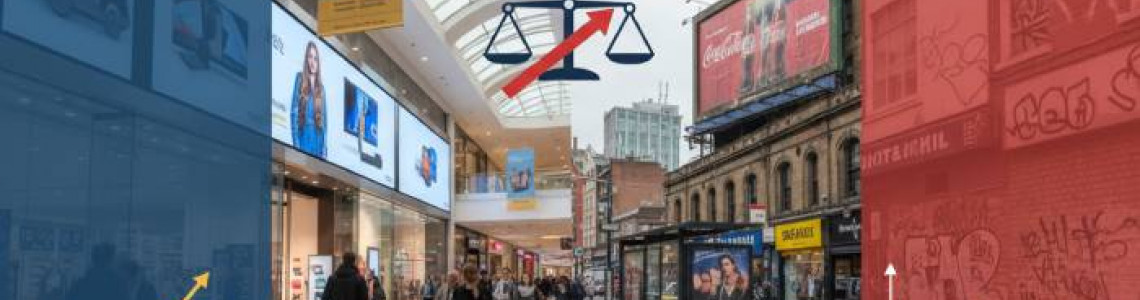
In an increasingly competitive advertising landscape, brands are constantly evaluating where to invest their media budgets for maximum return on investment (ROI). Two prominent Out-of-Home (OOH) channels that often come under comparison are Mall Media and High Street Advertising. While both offer strong visibility and physical presence, their effectiveness, audience engagement, and ROI potential differ significantly.
This article explores the strengths, limitations, and ROI drivers of mall media and high street advertising to help brands make informed media planning decisions.
Understanding Mall Media Advertising
Mall media refers to advertising placements within shopping malls, including digital screens, kiosks, escalator branding, atrium displays, parking area ads, and experiential zones.
Key Advantages of Mall Media
Highly Targeted Audience: Mall visitors are typically urban, brand-conscious, and purchase-ready.
Longer Dwell Time: Shoppers spend extended time inside malls, increasing ad exposure and recall.
Premium Environment: Clean, controlled, and aspirational spaces enhance brand perception.
Digital & Interactive Formats: DOOH, QR codes, and interactive screens enable engagement and measurable outcomes.
Proximity to Purchase: Ads influence decisions just before consumers enter stores.
ROI Perspective
Mall media delivers strong ROI for retail brands, FMCG, electronics, fashion, beauty, and entertainment, especially when campaigns focus on conversions, footfall, and in-mall sales uplift.
Understanding High Street Advertising
High street advertising includes billboards, hoardings, lamp post banners, bus shelters, and storefront branding located on busy roads and commercial streets.
Key Advantages of High Street Advertising
Mass Reach: High exposure to pedestrians, commuters, and vehicular traffic.
High Frequency: Daily repetition builds strong brand recall.
Geographic Coverage: Ideal for city-wide or hyperlocal awareness campaigns.
Cost-Effective for Visibility: Often lower CPM compared to premium indoor locations.
ROI Perspective
High street advertising is effective for brand awareness, top-of-funnel marketing, political campaigns, real estate, and mass-market products, where reach and repetition matter more than immediate conversion.
Mall Media vs High Street Advertising: ROI Comparison
| Factor | Mall Media | High Street Advertising |
|---|---|---|
| Audience Intent | High purchase intent | Mixed intent |
| Dwell Time | High | Low to moderate |
| Engagement | Interactive & digital | Mostly static |
| Measurement | Footfall, sales lift, QR scans | Impressions, reach |
| Brand Environment | Premium & controlled | Open & cluttered |
| Cost Efficiency | Higher cost, higher quality ROI | Lower cost, higher volume |
Which Delivers Better ROI?
The answer depends on campaign objectives:
Choose Mall Media if your goal is:
Driving in-store sales
Targeting premium or urban consumers
Launching new products
Measuring conversions and engagement
Choose High Street Advertising if your goal is:
Building mass awareness
Achieving wide geographic reach
Supporting political or public campaigns
Reinforcing brand presence at scale
Best ROI Strategy: Integrated Approach
Brands often see the highest ROI when combining both channels. High street advertising builds awareness, while mall media converts that awareness into action closer to the point of sale.
Final Verdict
Mall media generally delivers higher quality ROI due to targeted audiences, longer dwell time, and measurable engagement. High street advertising, on the other hand, offers volume-driven ROI through reach and frequency.
For brands aiming for performance-driven outcomes, mall media stands out. For brands focused on visibility and scale, high street advertising remains powerful. The smartest media plans balance both to maximize impact across the consumer journey.
Elyts Advertising and Branding Solutions | www.elyts.in (India) | www.elyts.agency (UAE)
Related Products
Leave a Comment