















Location Based Marketing | Power of Geo Targeted OOH Campaigns
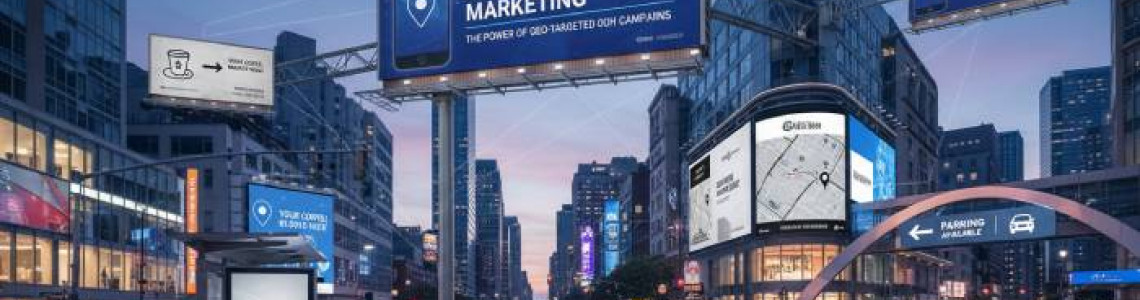
In today’s hyper-competitive marketplace, brands are constantly searching for smarter ways to connect with the right audience at the right time. Location-Based Marketing (LBM) has emerged as a game-changer, especially when combined with Out-of-Home (OOH) advertising. Geo-targeted OOH campaigns allow brands to deliver relevant, contextual, and timely messages based on a consumer’s physical location — driving stronger engagement, higher footfall, and measurable conversions.
As OOH media continues to evolve with digital innovation, geo-targeting is transforming static billboards into intelligent, data-driven communication tools.
What is Location-Based Marketing?
Location-Based Marketing refers to strategies that use real-time geographic data to target consumers in specific areas. This approach leverages GPS, mobile signals, Wi-Fi, and behavioral insights to deliver highly relevant advertising messages.
When integrated with OOH formats such as billboards, transit ads, street furniture, and Digital Out-of-Home (DOOH) screens, location-based marketing ensures that ads are not just seen — but seen by the right audience in the right place.
How Geo-Targeted OOH Campaigns Work
Geo-targeted OOH campaigns rely on advanced data analytics and programmatic technology. Here’s how they typically function:
1. Audience Data Mapping
Brands analyze demographic, behavioral, and mobility data to identify high-potential zones — such as shopping districts, business hubs, residential areas, or event venues.
2. Strategic Media Placement
Ads are placed in specific high-traffic areas where the target audience frequently visits.
3. Dynamic Content Delivery
With DOOH screens, content can change based on:
-
Time of day
-
Weather conditions
-
Nearby events
-
Audience movement patterns
4. Mobile Retargeting
Consumers exposed to an OOH ad can later receive mobile ads, reinforcing the message and increasing conversion probability.
Why Geo-Targeted OOH Campaigns Are So Powerful
1. Hyperlocal Relevance
Consumers respond better to ads that feel relevant to their immediate surroundings. For example, a restaurant promoting a lunch deal near office complexes is far more effective than a generic city-wide campaign.
2. Increased Footfall
Retailers and malls benefit greatly from geo-targeted OOH campaigns. Ads placed within a few kilometers of a store significantly increase store visits.
3. Real-Time Optimization
Digital OOH allows brands to adjust messaging instantly based on performance metrics and environmental triggers.
4. Measurable ROI
With mobile data tracking and footfall attribution tools, brands can measure:
-
Store visits
-
Engagement rates
-
Conversion lift
-
Cost per visit
This data-driven approach eliminates guesswork from traditional outdoor advertising.
Industries Benefiting from Location-Based OOH
Geo-targeted OOH campaigns are especially effective for:
-
Retail Brands – Driving in-store promotions and seasonal sales
-
Quick-Service Restaurants (QSRs) – Targeting nearby consumers during meal times
-
Real Estate Developers – Promoting projects in specific localities
-
Automobile Brands – Advertising near dealerships
-
Entertainment & Events – Boosting ticket sales in event zones
Combining OOH with Digital for Maximum Impact
The real strength of geo-targeted OOH lies in its integration with digital platforms. When OOH impressions are combined with mobile ads, social media campaigns, and performance marketing strategies, brands achieve a powerful omnichannel presence.
For example:
-
A consumer sees a billboard near a shopping mall.
-
Later, they receive a personalized ad on their smartphone.
-
The combined exposure increases brand recall and purchase intent.
This integrated strategy improves campaign effectiveness by amplifying both reach and relevance.
Key Metrics to Track in Geo-Targeted OOH Campaigns
To ensure campaign success, marketers should monitor:
-
Impressions within target zones
-
Store visitation lift
-
Audience dwell time
-
Mobile retargeting performance
-
Conversion rate by location
Data-backed insights help refine media planning and optimize budget allocation.
The Future of Location-Based OOH Advertising
With the rise of AI-driven analytics, smart city infrastructure, and programmatic DOOH platforms, geo-targeted OOH advertising is set to become even more precise and scalable. Brands will increasingly rely on predictive modeling and real-time consumer behavior tracking to make outdoor advertising smarter and more accountable.
As consumers demand personalized experiences, location-based marketing ensures that brands stay relevant without being intrusive.
Conclusion
Location-Based Marketing is redefining the effectiveness of OOH advertising. By leveraging geo-targeting, real-time data, and digital integration, brands can deliver highly contextual messages that drive measurable results.
In an era where personalization and precision are critical, geo-targeted OOH campaigns empower brands to move beyond broad messaging and embrace strategic, data-driven outdoor advertising. For businesses aiming to increase footfall, boost engagement, and maximize ROI, location-based OOH is not just an option — it’s a necessity.
Elyts Advertising and Branding Solutions | www.elyts.in (India) | www.elyts.agency (UAE)
Related Products





Leave a Comment