
















The Rise of Interactive OOH Media | Consumer Engagement | Digital
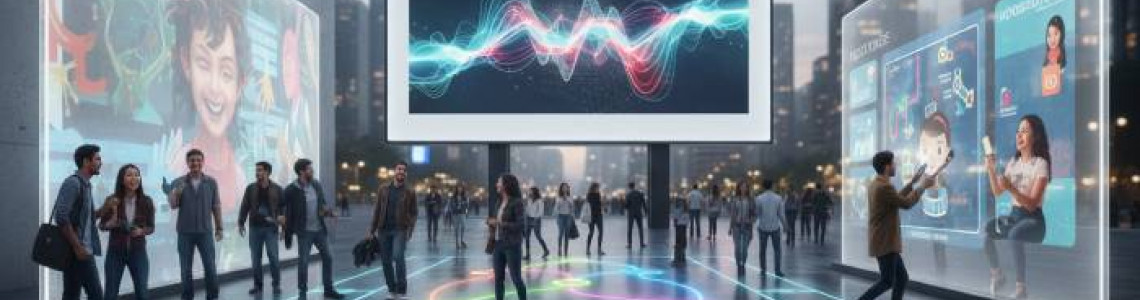
Out-of-Home (OOH) advertising has always been a powerful medium for reaching mass audiences in public spaces. However, in recent years, OOH has undergone a significant transformation. The rise of interactive OOH media is redefining how brands communicate with consumers, shifting from one-way messaging to immersive, two-way engagement. This evolution is not only enhancing brand recall but also creating memorable experiences that influence consumer behavior.
What Is Interactive OOH Media?
Interactive OOH media refers to outdoor advertising formats that encourage active participation from audiences rather than passive viewing. These formats leverage technologies such as touchscreens, QR codes, mobile integration, augmented reality (AR), near-field communication (NFC), sensors, and artificial intelligence (AI) to create dynamic, responsive ad experiences.
Unlike traditional billboards or static posters, interactive OOH invites consumers to engage, explore, and even co-create content, making advertising more experiential and human-centric.
Why Interactive OOH Media Is Growing Rapidly
Several factors are driving the growth of interactive OOH advertising across global and urban markets:
1. Digital-First Consumer Behavior
Modern consumers are accustomed to interactive digital experiences on smartphones and social platforms. Interactive OOH mirrors this behavior in physical spaces, creating familiarity and relevance.
2. Technological Advancements
Advances in DOOH screens, real-time data processing, facial recognition (privacy-compliant), and mobile connectivity have made interactive executions scalable and cost-effective.
3. Demand for Experiential Marketing
Brands are increasingly focused on experiences rather than impressions alone. Interactive OOH enables storytelling, gamification, and personalized engagement in real-world environments.
4. Increased Measurability
Interactive formats provide measurable data such as engagement time, interaction rates, scans, and conversions, helping advertisers better evaluate ROI.
Popular Interactive OOH Formats
Interactive OOH media appears in many innovative forms, including:
Touch-Enabled Digital Screens: Allow users to browse products, play games, or customize content.
QR Code-Based Experiences: Connect physical ads to landing pages, offers, or social media campaigns.
Augmented Reality Displays: Overlay digital elements onto real-world environments using mobile devices or smart screens.
Motion and Gesture Sensors: Trigger content changes based on audience movement or proximity.
Social Media Integration: Display live social feeds, user-generated content, or campaign hashtags in real time.
How Interactive OOH Boosts Consumer Engagement
Interactive OOH significantly enhances consumer engagement in multiple ways:
Creates Emotional Connections
Participation leads to stronger emotional responses, which improves brand affinity and recall.
Encourages Active Participation
Gamified ads, polls, or challenges motivate audiences to spend more time with the brand message.
Personalizes Brand Experiences
Data-driven interactions allow brands to tailor messages based on time, location, or audience behavior.
Drives Online-to-Offline Integration
By linking OOH with mobile and digital platforms, brands can seamlessly guide consumers from awareness to action.
Benefits for Brands and Advertisers
Interactive OOH media offers clear advantages for modern marketers:
Higher dwell time compared to static OOH
Improved brand recall and message retention
Enhanced social sharing and earned media
Actionable consumer insights and analytics
Stronger omnichannel campaign performance
These benefits make interactive OOH a valuable component of integrated marketing strategies.
Challenges to Consider
Despite its advantages, interactive OOH also comes with challenges such as higher initial investment, technical maintenance, and the need for creative innovation. Additionally, brands must ensure compliance with data privacy and user consent regulations to maintain trust.
The Future of Interactive OOH Media
As smart cities evolve and 5G connectivity expands, interactive OOH media will become even more intelligent and immersive. Future campaigns are expected to integrate AI-driven personalization, voice interaction, and deeper mobile synchronization. Sustainability will also play a role, with energy-efficient screens and eco-friendly installations gaining importance.
Conclusion
The rise of interactive OOH media marks a pivotal shift in outdoor advertising. By transforming public spaces into engagement-driven environments, brands can connect with consumers in more meaningful, memorable, and measurable ways. As technology continues to evolve, interactive OOH will remain a powerful tool for driving consumer engagement and building stronger brand relationships in the real world.
Elyts Advertising and Branding Solutions | www.elyts.in (India) | www.elyts.agency (UAE)
Related Products



Leave a Comment