














The Impact of 5G on the Future of Digital Out of Home Advertising
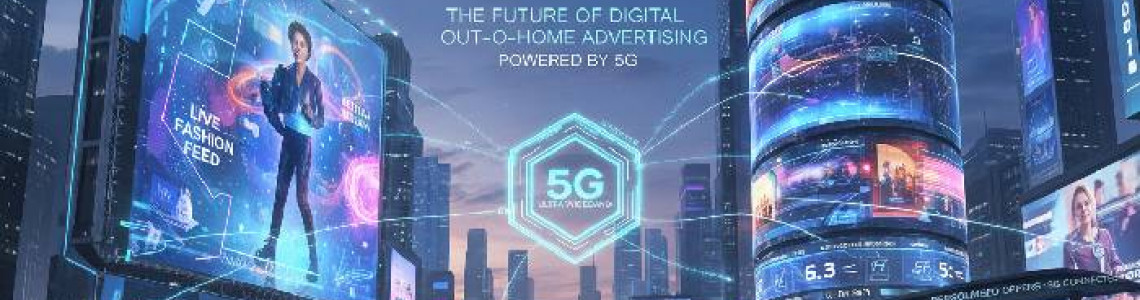
Digital Out-of-Home (DOOH) advertising has come a long way from static billboards and basic LED displays. Today, it is evolving into a highly dynamic and interactive platform, thanks to rapid advancements in mobile connectivity and technology. Among these innovations, 5G technology stands out as a game-changer, offering unparalleled speed, low latency, and massive device connectivity. Here’s how 5G is shaping the future of DOOH advertising.
1. Ultra-Fast Content Delivery
One of the most immediate impacts of 5G on DOOH is the ability to deliver high-resolution video and interactive content in real time. Unlike previous networks, 5G supports ultra-fast download and streaming speeds, allowing advertisers to showcase 4K or even 8K content without buffering. This creates more visually striking and attention-grabbing displays that captivate audiences.
2. Real-Time Personalization
5G enables real-time data transmission, which means DOOH campaigns can be dynamically personalized based on audience demographics, location, and even weather conditions. Imagine a billboard that adjusts its message depending on the time of day, foot traffic, or nearby events—5G makes this level of personalization practical and scalable.
3. Integration with Mobile and AR Experiences
The proliferation of 5G-powered smartphones allows advertisers to seamlessly integrate DOOH with mobile campaigns and augmented reality (AR) experiences. Users can interact with billboards via their devices, scan QR codes, or participate in live gamified experiences, creating higher engagement rates and measurable ROI.
4. Enhanced Programmatic DOOH Capabilities
Programmatic DOOH advertising relies heavily on real-time bidding and data-driven decision-making. With 5G, these systems can process vast amounts of data almost instantaneously, optimizing ad placements and ensuring that campaigns reach the right audience at the right time. This makes DOOH more efficient, targeted, and cost-effective for brands.
5. Smart City Integration
As cities become smarter, 5G networks will allow DOOH screens to connect with IoT devices and urban infrastructure, enabling hyper-localized advertising. For instance, digital displays can respond to traffic patterns, public transportation schedules, or environmental conditions, offering ads that are contextually relevant to the audience.
6. Immersive and Interactive Storytelling
With low latency and high bandwidth, 5G allows DOOH platforms to deliver immersive experiences such as holograms, AR overlays, and interactive digital content. This opens up new creative possibilities for brands, enabling storytelling that was previously impossible on traditional out-of-home displays.
Conclusion
The advent of 5G is not just an incremental improvement—it represents a fundamental shift in the way Digital Out-of-Home advertising operates. From real-time personalization and programmatic optimization to immersive AR experiences, 5G empowers advertisers to engage audiences like never before. Brands that adopt 5G-enabled DOOH strategies will be better positioned to capture attention, drive engagement, and maximize the impact of their advertising campaigns in the years to come.
Elyts Advertising and Branding Solutions | www.elyts.in (India) | www.elyts.agency (UAE)
Related Products



Leave a Comment