









Best Practices | High Impact Billboard Design | Digital Marketing
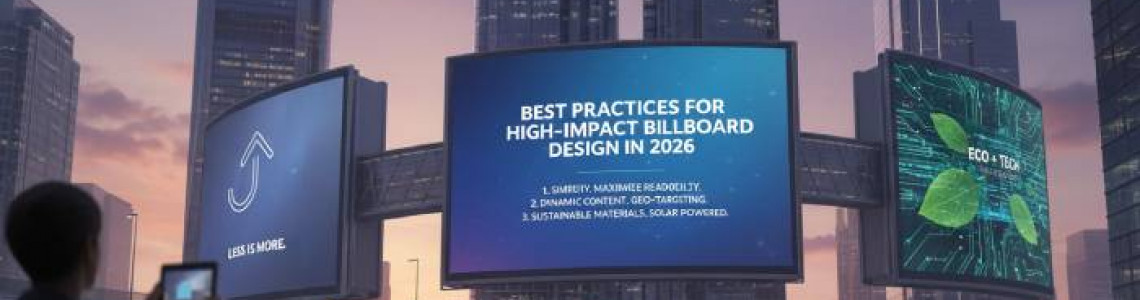
Billboards remain one of the most effective tools in Out-of-Home (OOH) advertising, even in the era of digital marketing. However, creating a high-impact billboard that grabs attention and communicates your message effectively requires more than just a large image and bold text. With evolving audience expectations and urban environments becoming increasingly competitive, the year 2026 demands strategic, visually compelling, and data-informed billboard design. Here’s a comprehensive guide to best practices.
1. Keep It Simple and Focused
Billboards are viewed in seconds, often from moving vehicles. Minimal text, clear visuals, and a single call-to-action (CTA) are essential. Avoid clutter and focus on one core message.
Tip: Use no more than 7 words for text-heavy billboards and leverage strong, high-contrast visuals to make an immediate impact.
2. Use Bold and Readable Typography
Typography can make or break a billboard design. Choose fonts that are easily readable from a distance, with sufficient spacing between letters. Avoid overly stylized fonts that might slow comprehension.
Tip: Test font sizes and readability from different distances before finalizing the design.
3. Leverage Striking Visuals
Images and graphics should be bold, high-quality, and relevant to your brand message. A compelling visual can communicate the essence of your message even without text.
Tip: Incorporate dynamic imagery or iconic visuals that stay in viewers’ memory.
4. Optimize Color and Contrast
High-contrast color combinations ensure readability and catch attention even in bright daylight. Colors should align with your brand but also stand out against the surrounding environment.
Tip: Use complementary colors to make key elements pop, and avoid blending with nearby urban structures.
5. Incorporate Digital and Interactive Elements
Digital billboards allow dynamic content, animations, and even location-based messaging. QR codes or AR integration can turn traditional billboards into interactive experiences, enhancing engagement.
Tip: Ensure any interactive elements are simple, mobile-friendly, and quick to engage with.
6. Prioritize Location and Context
Even the best design can fail if placed in the wrong location. Study traffic patterns, demographics, and sightlines to choose placements where your audience will notice your message.
Tip: Align billboard messaging with the local context or season to increase relevance.
7. Test and Iterate
Data-driven billboard campaigns outperform those based on intuition alone. Use A/B testing for visuals, text, and placements to determine what resonates most with your audience.
Tip: Track engagement through digital add-ons, website traffic spikes, or QR code scans to measure ROI.
8. Ensure Brand Consistency
Your billboard should be instantly recognizable as part of your brand ecosystem. Consistent use of logos, brand colors, and tone ensures that viewers connect the billboard with your brand immediately.
Final Thoughts
High-impact billboard design in 2026 is about blending creativity, simplicity, and strategy. By focusing on readability, bold visuals, location, and interactive elements, brands can create memorable OOH campaigns that cut through urban noise and drive meaningful results. As urban landscapes evolve, the most successful billboards will be those that not only grab attention but also leave a lasting impression.
Elyts Advertising and Branding Solutions | ww
w.elyts.in (India) | www.elyts.agency (UAE)
Related Products
Leave a Comment