
















How AI Is Transforming Digital Marketing Campaigns | 2026 | Elyts
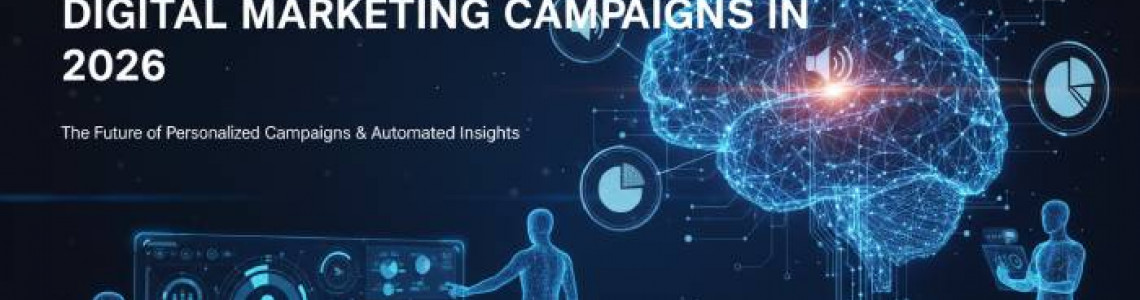
Digital marketing in 2026 looks dramatically different from what it was just a few years ago. Artificial Intelligence (AI) is no longer just a supporting tool—it has become the backbone of modern marketing campaigns. From predictive analytics to hyper-personalized customer journeys, AI is helping brands create smarter, faster, and more profitable campaigns.
As competition intensifies across digital platforms, businesses that leverage AI-driven strategies are gaining a measurable advantage in engagement, conversion rates, and return on investment (ROI).
1. Hyper-Personalization at Scale
In 2026, personalization is no longer optional—it is expected.
AI analyzes massive volumes of consumer data, including browsing behavior, purchase history, content preferences, and engagement patterns. With this data, brands can deliver:
-
Personalized email campaigns
-
Dynamic website content
-
Customized product recommendations
-
Tailored ad creatives
Unlike traditional segmentation, AI enables real-time personalization at scale. Every user interaction becomes a data point that refines future communication. The result? Higher engagement rates and stronger customer loyalty.
2. Predictive Analytics for Smarter Decision-Making
One of AI’s most powerful contributions to digital marketing campaigns is predictive analytics.
Instead of reacting to trends, marketers can now anticipate them. AI tools forecast:
-
Customer churn probability
-
Lifetime value (LTV)
-
Conversion likelihood
-
Optimal ad timing
-
Product demand trends
This predictive capability allows marketing teams to allocate budgets more effectively and design campaigns that align with expected consumer behavior.
3. AI-Generated Content and Creative Optimization
Content remains king—but AI is reshaping how it’s created and optimized.
In 2026, AI tools assist in:
-
Generating blog drafts
-
Writing ad copy variations
-
Producing social media captions
-
Creating video scripts
-
Designing visual creatives
More importantly, AI continuously tests and refines creative elements using A/B and multivariate testing. It identifies which headlines, visuals, CTAs, and formats perform best—often in real time.
This significantly reduces guesswork and speeds up campaign optimization cycles.
4. Programmatic Advertising and Real-Time Bidding
AI has revolutionized digital advertising through advanced programmatic systems.
Modern AI-powered platforms:
-
Analyze audience behavior instantly
-
Adjust bids in milliseconds
-
Optimize ad placements
-
Reduce wasted ad spend
In 2026, campaigns can automatically shift budget allocation toward high-performing channels, demographics, and geographies without manual intervention. This automation maximizes ROI while maintaining precision targeting.
5. Conversational AI and Customer Engagement
Chatbots and virtual assistants have evolved far beyond scripted responses.
AI-driven conversational systems now:
-
Understand natural language context
-
Provide personalized recommendations
-
Resolve customer issues instantly
-
Qualify leads automatically
These systems operate 24/7, improving customer experience while reducing operational costs. In many industries, conversational AI has become the first touchpoint in the buyer journey.
6. Advanced Audience Segmentation
Traditional demographic targeting is outdated.
AI segments audiences based on behavioral signals, intent patterns, sentiment analysis, and micro-interactions. This enables marketers to identify high-intent users even before they make a purchase decision.
Micro-segmentation ensures that marketing messages are delivered to the right person, at the right time, with the right context.
7. Voice and Visual Search Optimization
With the rise of smart devices and visual search platforms, AI plays a crucial role in optimizing campaigns for:
-
Voice search queries
-
Image-based product searches
-
AI-powered recommendation engines
Marketers now structure content to match conversational queries and image recognition systems. This improves discoverability across search ecosystems.
8. Real-Time Campaign Performance Optimization
AI dashboards provide live performance insights.
Instead of waiting for weekly reports, marketers can instantly see:
-
Cost per acquisition (CPA)
-
Click-through rates (CTR)
-
Engagement trends
-
Conversion funnel drop-offs
AI systems automatically recommend adjustments or even implement them autonomously. This creates agile marketing environments where campaigns evolve continuously.
9. Ethical AI and Data Privacy Compliance
In 2026, responsible AI usage is a priority.
With stricter data privacy regulations worldwide, AI systems are now designed with compliance frameworks built in. Marketers use AI to:
-
Ensure transparent data collection
-
Manage consent preferences
-
Protect customer data
-
Avoid algorithmic bias
Trust has become a competitive differentiator, and ethical AI strengthens brand credibility.
10. Improved ROI Measurement and Attribution
Attribution modeling has become significantly more accurate with AI.
Multi-touch attribution systems powered by machine learning analyze the full customer journey across platforms. Marketers can now understand exactly which touchpoints drive conversions.
This clarity allows for better budget distribution and more effective cross-channel strategies.
The Future of AI in Digital Marketing
AI is not replacing marketers—it is empowering them.
In 2026, the most successful brands combine human creativity with machine intelligence. AI handles data processing, automation, and optimization, while marketers focus on strategy, storytelling, and brand positioning.
Elyts Advertising and Branding Solutions | www.elyts.in (India) | www.elyts.agency (UAE)
Related Products



Leave a Comment