
















How AI Is Revolutionizing Sports Media Content and Advertising
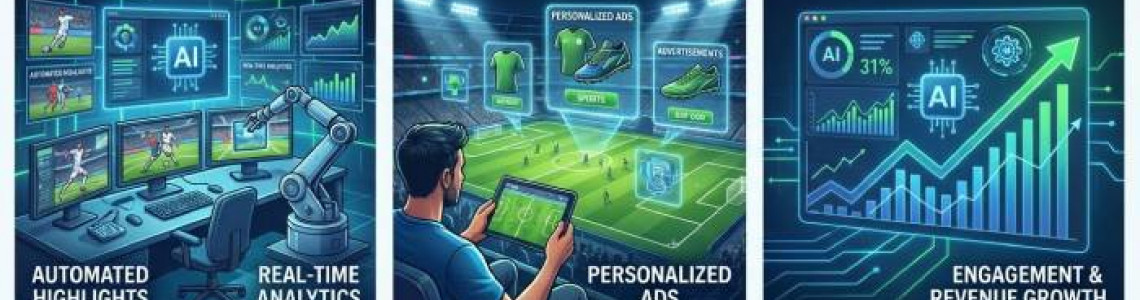
The sports media industry is undergoing a seismic shift, and artificial intelligence (AI) is at the heart of this transformation. From content creation to advertising, AI is reshaping how fans experience sports and how brands connect with their audiences. This article explores the multifaceted ways AI is revolutionizing sports media content and advertising.
1. Personalized Fan Experiences
One of AI’s most impactful applications in sports media is personalizing content for fans. AI algorithms analyze fan behavior, viewing patterns, and social media interactions to deliver customized highlights, game recaps, and news updates. Platforms like ESPN and DAZN are already leveraging AI-driven personalization to recommend content based on individual preferences, increasing engagement and viewer satisfaction.
2. Automated Content Creation
AI-powered tools are enabling media companies to produce content at unprecedented speeds. Natural language generation (NLG) technology can transform raw match data into detailed reports, articles, or even social media posts within seconds. This automation allows sports journalists and marketers to focus on high-value storytelling while ensuring fans receive timely updates.
3. Predictive Analytics for Advertising
AI is helping brands optimize their advertising strategies through predictive analytics. By analyzing fan demographics, past engagement patterns, and contextual data, AI predicts which ads are most likely to resonate with specific segments. This reduces ad spend wastage, improves ROI, and ensures that marketing campaigns are more relevant to fans.
4. Enhanced Video and Highlight Production
AI-driven video editing tools can automatically generate match highlights, key moments, and player performance summaries. Advanced computer vision algorithms detect critical plays, track player movements, and even create immersive virtual replays. This not only enhances the viewing experience but also provides advertisers with premium opportunities to integrate branded content seamlessly.
5. Real-Time Fan Engagement
Through AI chatbots and virtual assistants, sports networks and teams can engage fans in real-time. Fans can get instant updates, trivia, or personalized recommendations during live matches, creating a more interactive and immersive experience. This direct engagement also opens doors for targeted advertising, offering brands the ability to reach fans with contextual offers precisely when they are most engaged.
6. Sentiment Analysis for Campaign Optimization
AI-powered sentiment analysis monitors social media and fan forums to gauge public reactions to events, players, or campaigns. Sports marketers can adjust their strategies based on real-time insights, ensuring that advertising resonates with the target audience and avoids negative backlash.
7. Sponsorship and Brand Integration
AI assists in identifying optimal sponsorship and branding opportunities by analyzing viewer attention patterns during broadcasts. Brands can strategically place their messaging in moments that maximize visibility and fan engagement, enhancing the effectiveness of sports advertising.
Conclusion
Artificial intelligence is not just a technological trend; it is a transformative force in sports media content and advertising. By personalizing fan experiences, automating content creation, optimizing ad strategies, and providing real-time engagement insights, AI is driving a new era of sports marketing. As the industry continues to evolve, embracing AI technologies will be crucial for media companies and brands aiming to capture the hearts of fans and stay ahead in a competitive market.
Elyts Advertising and Branding Solutions | www.elyts.in (India) | www.elyts.agency (UAE)
Related Products



Leave a Comment