














3D Billboards | OOH Capturing Attention in Crowded Markets
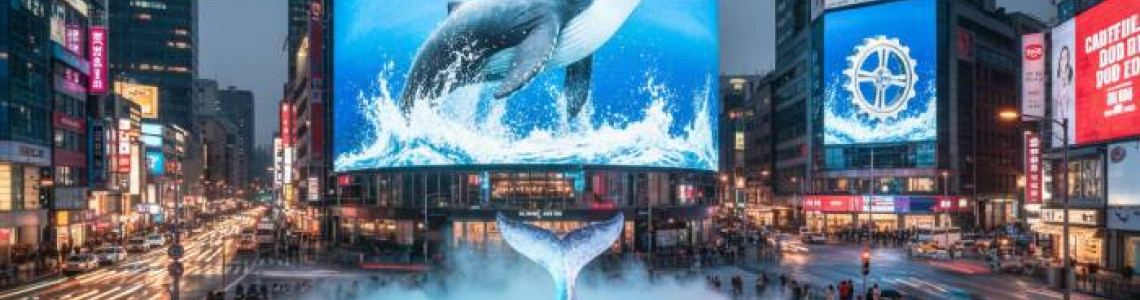
In today’s hyper-competitive advertising landscape, brands are fighting for seconds of consumer attention. With digital fatigue on the rise, marketers are rediscovering the power of Out-of-Home (OOH) media—especially 3D billboards and experiential OOH campaigns. These high-impact formats are redefining outdoor advertising by turning static spaces into immersive brand experiences.
For agencies and brands aiming to stand out in crowded urban markets, 3D billboards and experiential OOH offer a powerful combination of creativity, technology, and real-world engagement.
What Are 3D Billboards?
3D billboards are advanced Digital Out-of-Home (DOOH) displays that use anamorphic illusions, depth effects, and high-resolution LED screens to create the illusion of three-dimensional objects emerging from the screen. These billboards are typically placed in high-footfall areas such as city centers, highways, and commercial districts.
Unlike traditional static billboards, 3D billboards are dynamic, visually disruptive, and highly shareable across social media platforms.
Why 3D Billboards Work
-
Visual Disruption: The illusion of depth captures attention instantly.
-
Social Media Amplification: Passersby often record and share the content, extending campaign reach organically.
-
Memorability: The immersive effect increases brand recall.
-
Premium Brand Perception: High-tech executions position brands as innovative and forward-thinking.
The Rise of Experiential OOH
Experiential OOH goes beyond visibility—it creates interaction. These campaigns engage audiences physically or digitally through touchpoints such as AR integration, live installations, motion sensors, QR codes, and interactive displays.
Instead of simply seeing an ad, consumers become part of the experience.
Key Elements of Experiential OOH
-
Interactivity: Encourages active participation.
-
Immersion: Creates emotional engagement.
-
Storytelling: Builds deeper brand narratives.
-
Data Integration: Connects offline engagement with online tracking.
For example, brands can combine a 3D billboard with a QR code leading to a mobile AR experience, seamlessly bridging physical and digital environments.
How 3D and Experiential OOH Capture Attention in Crowded Markets
1. Breaking Through Advertising Clutter
Urban consumers are exposed to thousands of marketing messages daily. Traditional formats often blend into the background. 3D billboards, however, create a “stop-and-stare” effect, forcing visual attention even in high-traffic zones.
2. Enhancing Shareability
In the age of Instagram Reels and short-form video content, visually striking OOH campaigns often go viral. A single well-executed 3D billboard can generate millions of online impressions beyond its physical location.
3. Driving Emotional Engagement
Experiential OOH campaigns create emotional touchpoints. Whether it’s a pop-up installation or an interactive digital display, these campaigns transform passive audiences into active participants.
4. Supporting Omnichannel Marketing
Modern campaigns integrate OOH with digital marketing strategies. Experiential OOH can drive traffic to websites, apps, or social platforms, enabling measurable ROI. QR codes, NFC tags, and geo-targeted ads enhance conversion tracking.
Industries Benefiting from 3D & Experiential OOH
-
Entertainment & Media: Movie launches and OTT promotions.
-
Automotive: 3D vehicle displays creating dramatic visual impact.
-
Retail & Fashion: Product launches with immersive storytelling.
-
Technology Brands: Demonstrating innovation through futuristic visuals.
For agencies working in OOH, sports media, or mall media, integrating 3D and experiential formats can significantly enhance campaign performance and client value.
Measuring ROI in 3D and Experiential OOH
While creativity drives attention, performance measurement drives investment decisions. Brands can track effectiveness using:
-
Footfall analysis
-
Mobile location data
-
QR code scans
-
Social media engagement metrics
-
Brand lift studies
With advancements in programmatic DOOH, advertisers can now optimize placements and content in real-time, improving campaign efficiency.
Future Trends in 3D and Experiential OOH
Looking ahead, the evolution of OOH advertising will likely include:
-
AI-driven dynamic content
-
Real-time data-triggered creatives
-
Augmented Reality (AR) integrations
-
Hyper-local targeting
-
Sustainable LED and eco-friendly installations
As cities become more digitally enabled, 3D and experiential OOH will continue to blur the line between physical and digital advertising.
Conclusion
In crowded markets where consumer attention is scarce, 3D billboards and experiential OOH campaigns offer a compelling solution. They combine innovation, engagement, and shareability to create unforgettable brand moments.
For brands and agencies seeking to elevate their outdoor advertising strategy, investing in immersive OOH formats is no longer optional—it’s strategic. By leveraging creativity, technology, and integrated measurement, 3D and experiential OOH can transform public spaces into powerful storytelling platforms that capture attention and drive results.
Elyts Advertising and Branding Solutions | www.elyts.in (India) | www.elyts.agency (UAE)
Related Products



Leave a Comment