
















AI | Data Analytics | Changing OOH Advertising Campaigns in 2026
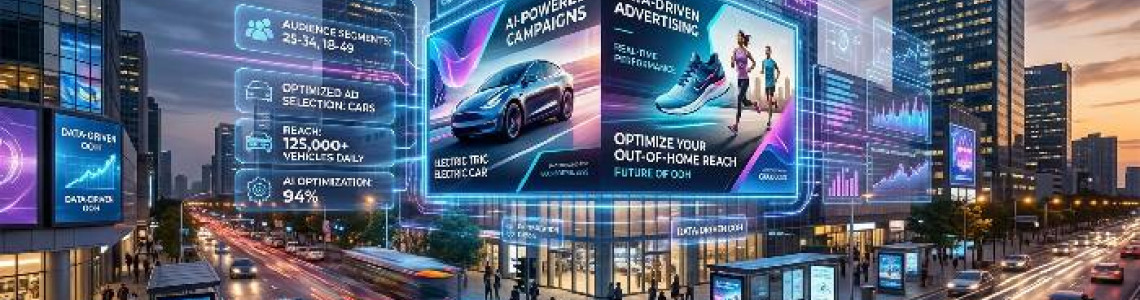
Out-of-Home (OOH) advertising has evolved far beyond static billboards and posters. With the rise of Artificial Intelligence (AI) and Data Analytics, OOH campaigns are becoming smarter, more targeted, and highly measurable. Brands can now deliver the right message to the right audience at the right time, making OOH one of the fastest-growing advertising channels in the digital era.
This article explains how AI and data analytics are transforming OOH advertising campaigns and why businesses should adopt these technologies to stay competitive.
1. What is OOH Advertising in the Digital Age?
Out-of-Home advertising refers to any advertisement that reaches consumers outside their homes. Traditionally, this included billboards, transit ads, posters, and signage. Today, OOH has expanded into Digital Out-of-Home (DOOH), which uses digital screens, programmatic buying, and real-time data.
Modern OOH campaigns are now powered by:
- Artificial Intelligence
- Big Data
- Machine Learning
- Real-time analytics
- Location-based targeting
These technologies allow advertisers to run campaigns that are dynamic instead of static.
2. Role of AI in OOH Advertising Campaigns
Artificial Intelligence helps advertisers automate decisions, analyze audience behavior, and optimize campaigns in real time.
a) Smart Audience Targeting
AI can analyze location data, demographics, and behavior patterns to show ads to the most relevant audience.
For example:
- Showing food ads near restaurants during lunch hours
- Showing travel ads near airports
- Showing retail offers near shopping malls
This improves engagement and reduces wasted ad spend.
b) Real-Time Ad Optimization
AI systems can change ads automatically based on conditions such as:
- Time of day
- Weather
- Traffic density
- Audience profile
Example:
A cold drink ad appears when temperature rises, and a coffee ad appears when it rains.
This makes campaigns more personalized and effective.
c) Predictive Campaign Planning
AI uses past campaign data to predict which locations, timings, and creatives will perform best.
Benefits:
- Better ROI
- Faster decision making
- Reduced trial and error
3. How Data Analytics Improves OOH Campaign Performance
Data analytics is the backbone of modern OOH advertising. It helps advertisers understand what works and what does not.
a) Audience Measurement
Earlier, billboard performance was estimated. Now, analytics tools use:
- Mobile location data
- GPS signals
- Traffic sensors
- Camera-based counting
This helps measure:
- Number of viewers
- Frequency of exposure
- Audience demographics
Advertisers can now prove campaign effectiveness.
b) Location Intelligence
Data analytics helps choose the best locations for ads.
Factors analyzed:
- Foot traffic
- Vehicle traffic
- Audience income level
- Buying behavior
- Nearby businesses
This ensures ads are placed where they will perform best.
c) Performance Tracking and Reporting
With analytics dashboards, advertisers can track:
- Impressions
- Engagement
- Conversion impact
- Campaign reach
This makes OOH as measurable as digital advertising.
4. Programmatic DOOH: The Future of OOH Advertising
Programmatic DOOH uses AI and data to automate ad buying.
Advantages:
- Ads can be booked instantly
- Campaigns can run for specific times
- Budget can be optimized automatically
- Ads can change in real time
Example:
A brand can run ads only during peak traffic hours instead of the entire day.
This reduces cost and increases efficiency.
5. Personalization in OOH Using AI
AI enables personalized outdoor advertising without invading privacy.
Examples:
- Ads change based on weather
- Ads change based on crowd type
- Ads change based on events nearby
- Ads change based on time
Personalized OOH increases:
- Attention
- Recall
- Engagement
- Conversion rates
6. Benefits of Using AI and Data Analytics in OOH Campaigns
| Benefit | Explanation |
|---|---|
| Better targeting | Ads reach the right audience |
| Higher ROI | Less wasted impressions |
| Real-time optimization | Campaigns improve automatically |
| Accurate measurement | Performance can be tracked |
| Cost efficiency | Budget used more effectively |
| Higher engagement | Relevant ads perform better |
7. Challenges in AI-Driven OOH Advertising
Even though AI improves OOH campaigns, there are challenges.
- Data privacy regulations
- High setup cost for digital screens
- Need for quality data
- Technical complexity
However, as technology becomes cheaper, these challenges are reducing.
8. Future of OOH Advertising with AI
The future of OOH advertising will include:
- AI-powered billboards
- Facial-free audience detection
- Real-time programmatic buying
- Integration with mobile ads
- Smart city advertising networks
Brands that use AI and analytics will have a major advantage in reaching modern consumers.
Conclusion
AI and Data Analytics are transforming OOH advertising from static displays into intelligent, data-driven campaigns. With real-time targeting, accurate measurement, and automated optimization, advertisers can achieve better results than ever before.
Businesses that adopt AI-powered OOH strategies can improve campaign performance, reduce costs, and deliver highly relevant messages to their audience.
Elyts Advertising and Branding Solutions | www.elyts.in (India) | www.elyts.agency (UAE)
Related Products


Leave a Comment